
OUR STORY
Laemthong Corporation Group business units include livestock and animal feed, food products, and packaging. From its inception, the company has continuously developed expertise and knowledge to advance the agricultural industry, underpinned by a solid operational foundation.
LAEMTHONG REMAINS
COMMITTED TO IMPROVING
THE QUALITY OF LIFE
AND CONTRIBUTING TO SUSTAINABLE
DEVELOPMENT, KEEPING THE
FUTURE IN MIND.
The company operates under a vision focused on sustainability, guided by the
ESG (Environment, Social, Governance)
This approach emphasizes not only profit but also social responsibility in three key areas

E - Environment

S - Social

G - Governance
The company is committed to running its operations in a socially and environmentally friendly manner,
maximizing resource efficiency, and addressing issues like global warming and greenhouse gas emissions,
both directly and indirectly.
BIOGAS
HARNESSING RENEWABLE ENERGY FROM WASTE
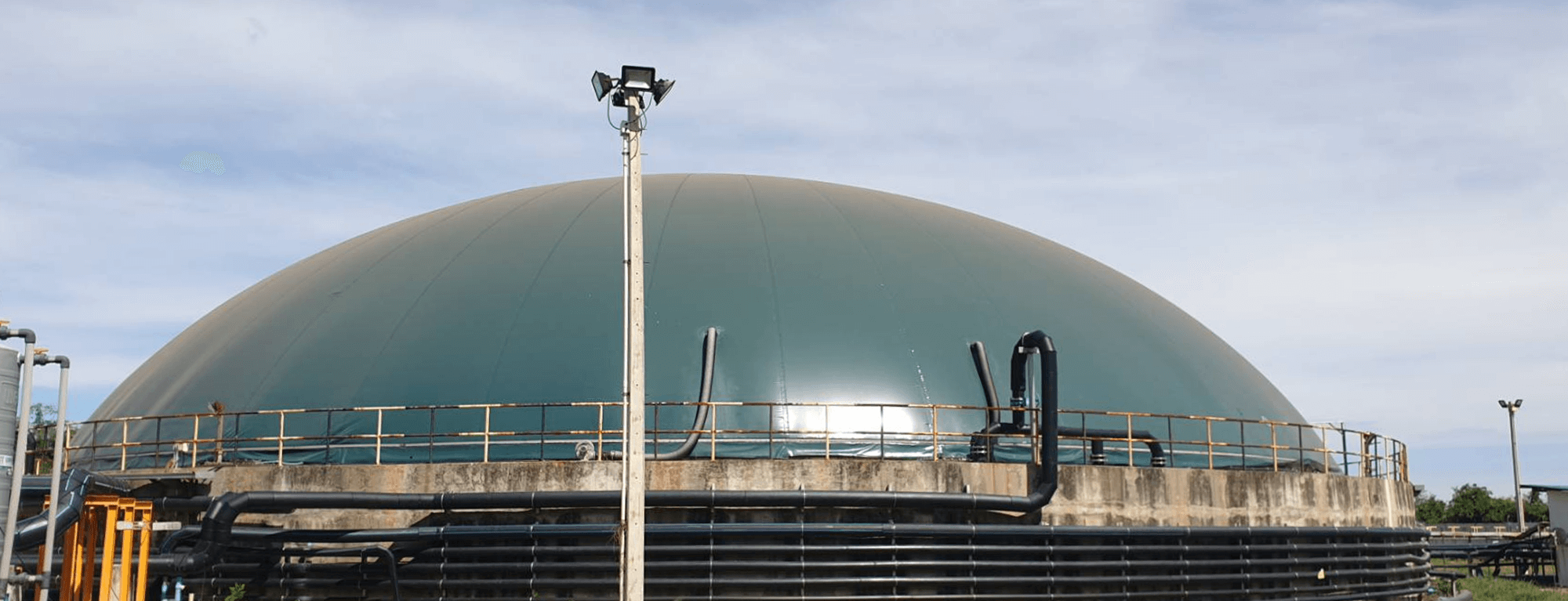
Laemthong generates biogas from wastewater and chicken manure from farms within the group. The produced biogas is processed and used to generate electricity. The biogas production capacity reaches up to 32,000 cubic meters per day, and the electricity production capacity can reach 72,000 kWh per day. One cubic meter of biogas can replace energy sources like LPG, diesel, fuel oil, and electricity.

The biogas
production capacity reaches up to
32,000 cubic meters per day

The electricity
production capacity can reach
72,000 kWh per day
Reducing ammonia emissions
By fermenting chicken manure, carbon dioxide and hydrogen are converted into biogas, reducing ammonia emissions when manure is used to fertilize crops.
Providing organic fertilizer
The byproduct from the biogas fermentation process contains essential nutrients like nitrogen, phosphorus, and calcium, along with a high organic matter content (around 30%). This organic matter helps improve soil structure, retain moisture, and enhance microbial activity, reducing the need for chemical fertilizers.
Reducing fossil fuel use
The electricity generated from biogas reduces the need for electricity generated from fossil fuels, directly reducing emissions from coal or gas-powered plants.
SOLAR ENERGY
HARNESSING SOLAR POWER FOR A SUSTAINABLE FUTURE
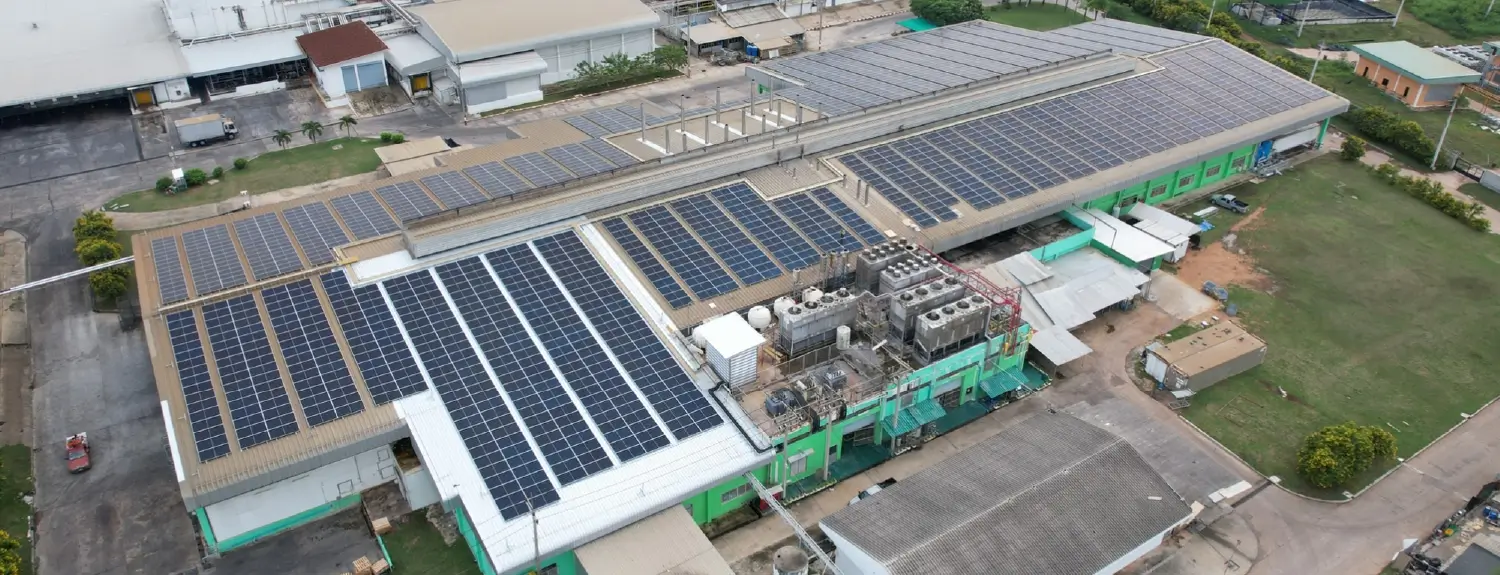
Globally, solar power continues to grow rapidly, with Thailand alone experiencing a 300% increase in solar energy production compared to 2023. Laemthong is committed to using clean solar energy to protect the environment and achieve a Net Zero Emission goal by 2065.
with a total capacity of over 8 megawatts, have reduced electricity costs by up to 47 million Baht per year and cut down greenhouse gas emissions by 5,390.26 tons of CO2 equivalent annually. This is equivalent to planting over 150,000 trees.

reduced electricity costs

cut down greenhouse gas emissions
By integrating biogas and solar energy into its operations, Laemthong demonstrates a strong commitment to environmental sustainability, helping to reduce its carbon footprint and contribute to the broader global effort to mitigate climate change.